The BFG conversation
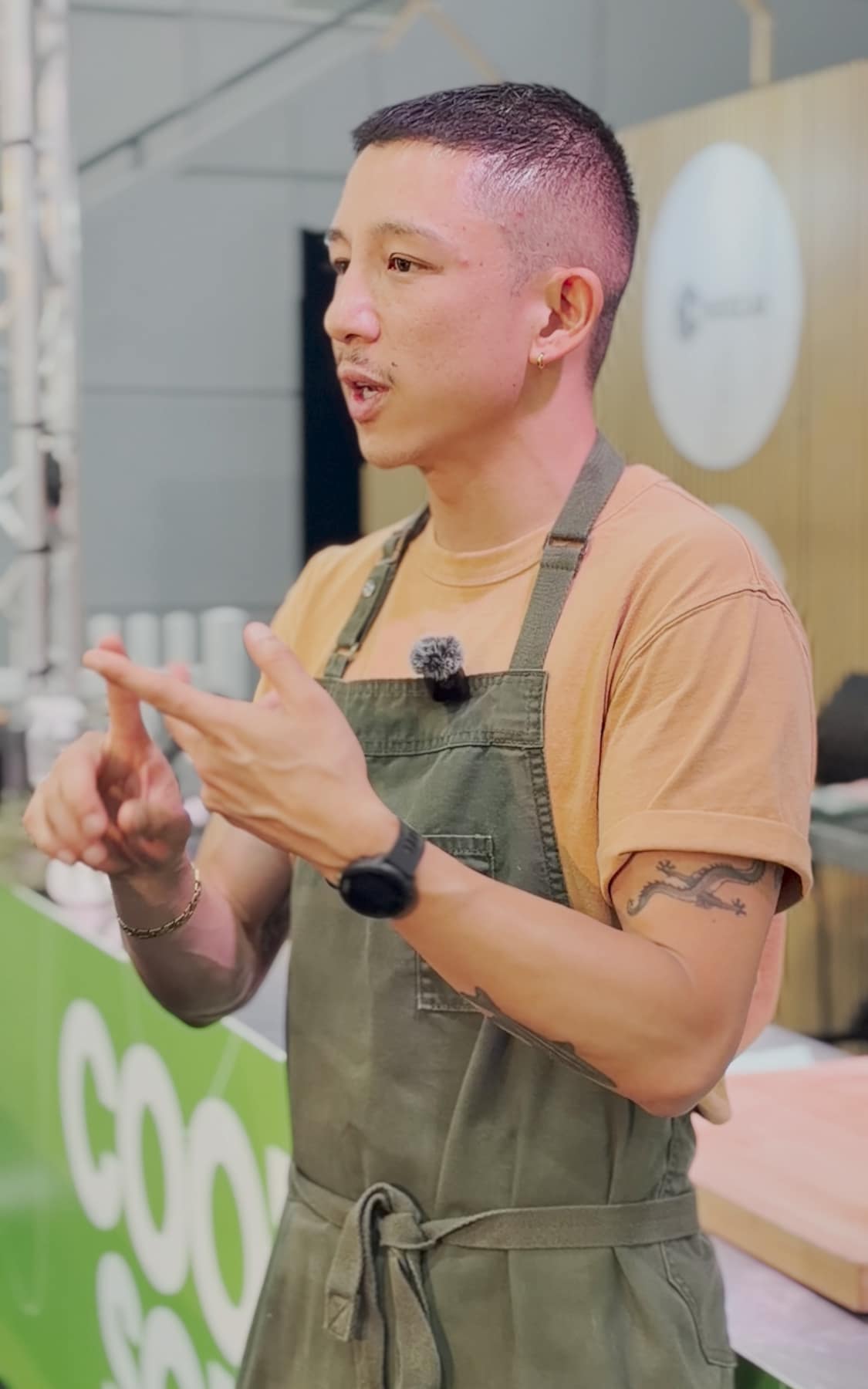
Brendan Pang has written four cookbooks. When I asked him which family recipes had been difficult to put on a page, he went back to his grandmother.
“A lot of the Mauritian food I grew up with, I haven't yet put into a cookbook because they mean so much to me,” he said.
His grandmother taught him through cooking and smelling, rather than written recipes. There were dishes he had grown up eating that he was still trying to learn from her. Recreating them, he told me, was difficult.
Brendan competed on MasterChef Australia in 2018 and returned for Back to Win in 2020. He founded Bumplings in Fremantle, taught cooking classes and published four books: This Is a Book About Dumplings, This Is a Book About Noodles, This Is a Book About Street Food and This Is a Book About Rice.
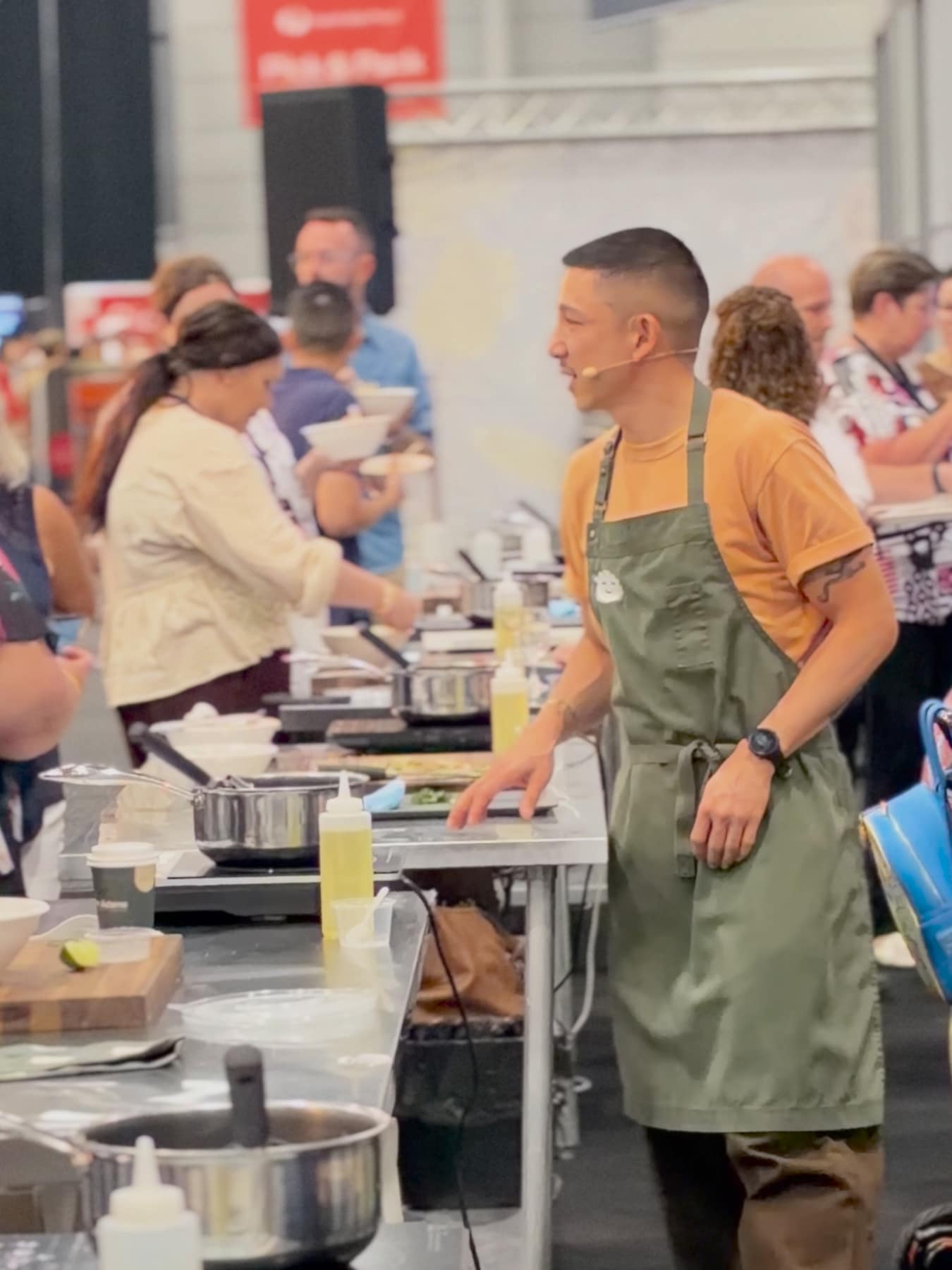
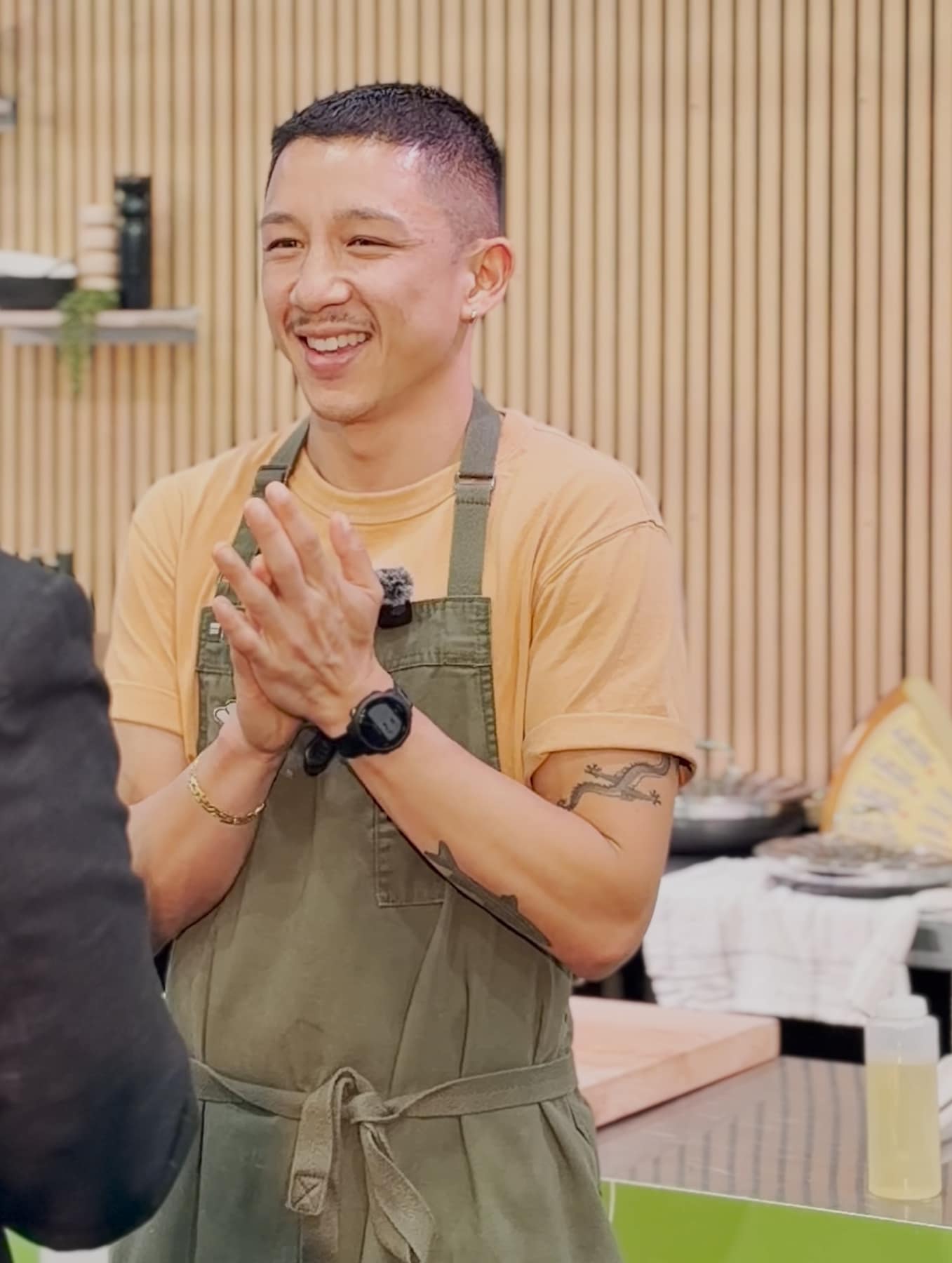
We spoke beside the Cooking School stage at Brisbane's Good Food & Wine Show, after his Saturday morning wonton workshop. The show's programme described chicken wontons shaped using a technique inspired by his grandmother, served with a Thai-style red curry broth.
Dinner before lunch is over
His grandmother, who he describes as Chinese-Mauritian with a Cantonese background, has been his biggest influence in the kitchen. He described food as integral to family life. Cooking Mauritian food and cooking from his Chinese heritage were both special to him. Food was part of the conversation well before anyone was hungry again.
“We talk about dinner before we've even finished lunch.”
He remembers sitting around the table making wontons and noodles from scratch as a child, starting with flour and water and making different dishes from those simple ingredients.
Her teaching went beyond the dishes themselves. He spoke about intuition: taste, smell, look and feel. A written recipe could tell someone what to add. The way his grandmother cooked asked him to pay attention to what was happening in front of him.
There was another lesson alongside the technique. He spoke about being generous and sharing food with everyone.
He described much of his work now as storytelling. Those memories sit behind his work as an author. He described food as a connector, a kind of language. Most of the relationships he had made, he said, had been around a table.
Choosing the recipes was harder for him to explain. He said it came down to what inspired him for each one, an instinct rather than a process he could easily describe. Sharing stories around the important recipes his grandmother had taught him, he said, came naturally.
Starting from scratch, again
Getting into food professionally meant changing direction. He had been working in child protection for the government. It was working for the government, he told me, that he did not enjoy. He wanted to work for himself and be creative.
“I wanted to do something that I was equally as passionate about, but in my own way.”
He had already studied architecture before social work. Food became another change of direction, this time towards something that had long been part of his family life.
MasterChef taught him confidence and the value of being himself, he said. Having a platform to share his Chinese-Mauritian heritage as a second-generation Australian mattered to him. It also gave him a platform to cook and, he said, to inspire other people.
I asked about the pressure of moving from social work into a television kitchen. He said he had always remained quite calm under pressure, something people often commented on. Social work had already put him in stressful situations. The kitchen itself felt natural, like being at home. Rather than concentrating on the lights and cameras, he said, he focused on doing something that made him happy.
Running a business required a different kind of learning. When he started Bumplings, he said he had no experience in hospitality or running his own business. He described starting from scratch in hospitality, from food prep to the commercial side.
He remembered being busy from the beginning: selling out of dumplings one night, then having to start again the next day.
What leaves the classroom
Brendan thinks many Australian diners are still unfamiliar with Mauritian food. He describes a mix of Indian, Chinese, French and Creole influences. Some flavours may be familiar to people, he said, even when they do not understand the cuisine as a whole.
Many of those diners, he said, have not been to Mauritius. Sharing its food is an opportunity he feels lucky to have.
Success now, he said, means feeling rewarded by the work itself. His work takes different forms: a class, a demonstration, a pop-up or a cookbook. Across them, the biggest thing for him was telling his story and connecting with people.
Then he gave a smaller example. Someone comes to the Cooking School, learns a recipe from him, walks away and makes it at home. That, he said, was special.
Before we finished, I asked what he wanted to say to Brisbane Food Guide readers. He praised the city's food scene, said he liked what was happening here and was excited to return. He hoped there might be another chance to cook here through a pop-up.
His grandmother had shown him how to cook. In Brisbane, he was passing those lessons on. Some of the dishes he grew up eating, though, were still difficult for him to recreate.
“I need to really spend more time in the kitchen and recreate that with her.”
Sources & editorial notes
Interview by GP Khehra at Brisbane's Good Food & Wine Show on 24 October 2026. Background: Brendan Pang's biography, his books at Pan Macmillan and the Cooking School programme.
More from the Good Food & Wine Show
Our guide to the 2026 Brisbane showShare this story
Pass it on.
Share this story with someone who loves cooking, or save it for later.
Add Brisbane Food Guide as a preferred source on Google
More from the BFG Journal