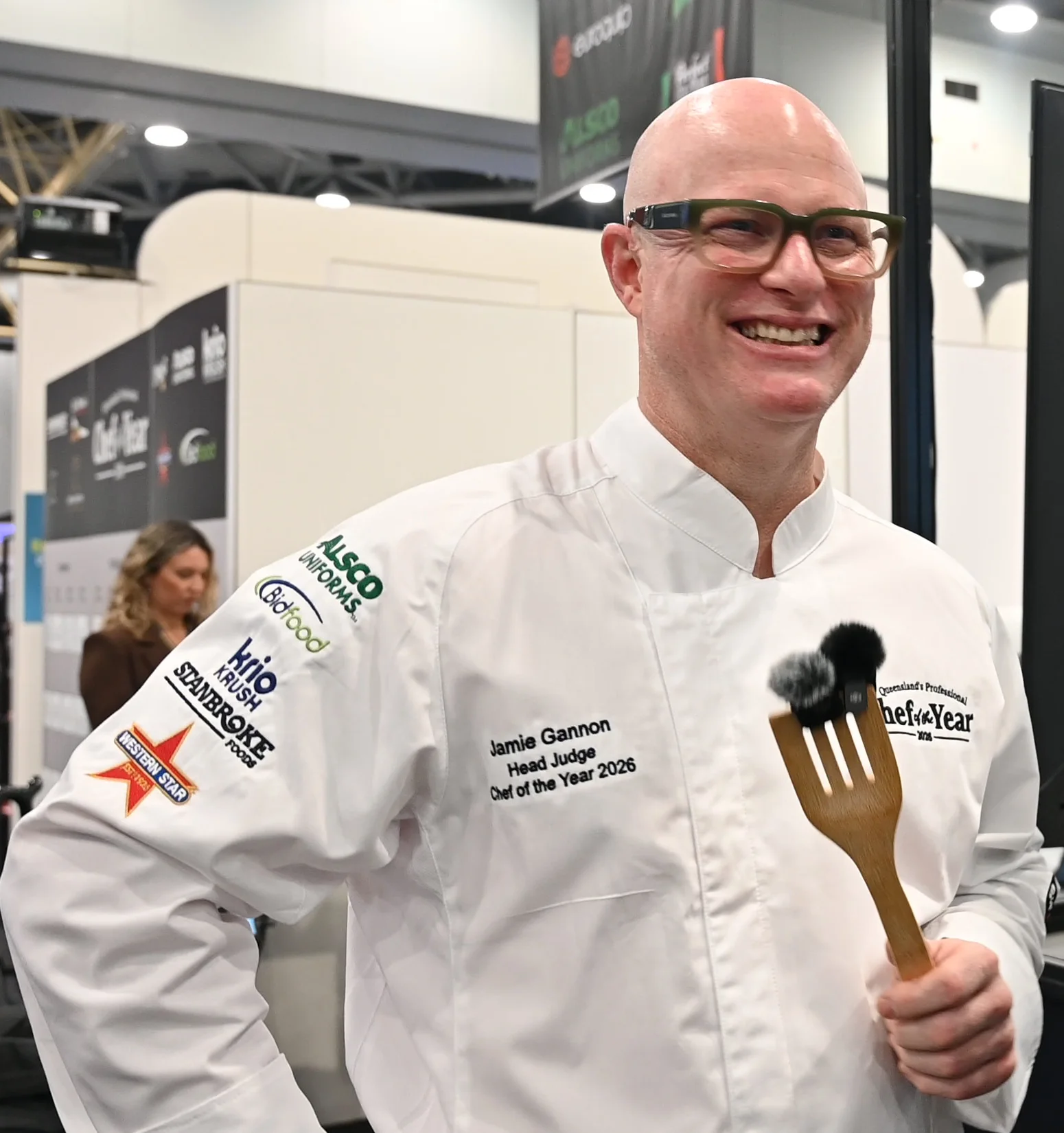
The BFG conversation
Ask Jamie Gannon about the biggest mistake hospitality operators make and he gives a three-word answer: “Chasing the dollar.”
Then he explains why that does not mean ignoring the numbers. An operator might say they need to make 75 per cent gross profit, he says, but naming the target is not the same as working out how to reach it. His answer moves from employing the right people and costing food correctly to clean toilets, the music and the atmosphere.
We spoke at Food & Hospitality Queensland at the Brisbane Convention & Exhibition Centre on 13 October. Gannon, now with East Coast Collective, is head judge of the Australian Professional Chef of the Year. He also heads the Queensland competition's judging panel. He has looked after the food across more than 40 venues and co-hosts Ten Minute Kitchen on Channel 10.
Those roles put him on both sides of a familiar hospitality problem: recognising good cooking, and helping create the conditions in which it can keep happening.
The whole room matters
Gannon's operating checklist starts with people and produce. Hire well, buy well, cost and look after the food properly, then serve the customer properly. But he does not stop at the kitchen door. The toilets, soundtrack and ambience belong in the same answer.
He argues that margins leave little room for neglecting any of it. For a diner, that means the things outside the plate are not incidental to how he thinks a venue should work.
His 75 per cent example is illustrative. He is talking about an operator who knows the desired result but still needs to work out the route to it. The target cannot choose the produce, cost the recipe or look after a guest.
“The numbers dictate what we do, but you can always do it by doing good food, and that's what I stand by,” he said.
In that answer, cooking and cost control sit together. Looking after the food includes knowing what it costs and how it is handled. Looking after the customer includes noticing what happens away from the table.
A mystery box is not an excuse to arrive unprepared
The same practical streak appears when we ask what separates an exceptional competitor from a chef who can follow a recipe.
Gannon's first advice is to look at the sponsors. They offer clues to the ingredients a chef is likely to encounter, he says, so competitors can arrive with ideas rather than begin thinking only when the box opens.
He expects chefs to make something of the produce they receive. Treating a good ingredient conservatively can be fine, he says, but a cooking competition gives them a chance to show how they can adapt it.
He is asking for judgement, not complication for its own sake. Preparation gives a chef somewhere to begin; the ingredients still require a response.
The dish he remembered
We asked about Alfan Musthafa of Warisan in Fortitude Valley, the 2025 Queensland Chef of the Year. The organiser's record describes a winning main of wagyu rump with lemon myrtle and other native ingredients. In Gannon's recollection, the detail that stood out was the use of lemon-myrtle sticks.
He saw initiative in the way Musthafa brought his Indonesian heritage into the challenge while working with Australian ingredients. When we pressed him on why that combination worked, he returned to the relationship between where the chef came from and what he was cooking with.
For Gannon, the success was in bringing those things together. His praise was specific to the cook and the choices on the plate, rather than a general endorsement of anything labelled fusion.
The example also grounds his enthusiasm for Queensland's food scene in a local chef's work, not simply in the size of a crowd.
Back the person beside you
Before the hotel kitchens and judging panels, there was the Royal Australian Navy. Asked what it taught him about leadership under pressure, Gannon talks about discipline, then about backing a teammate.
He describes being better in pairs than alone, a lesson he says he has taken through his career. You cannot do everything yourself.
It is a useful counterpoint to an event built partly around individual titles. The chef at the centre of the attention still has to know how to work with other people.
It is also a way of looking at leadership that leaves room for someone other than the head chef to make a contribution.
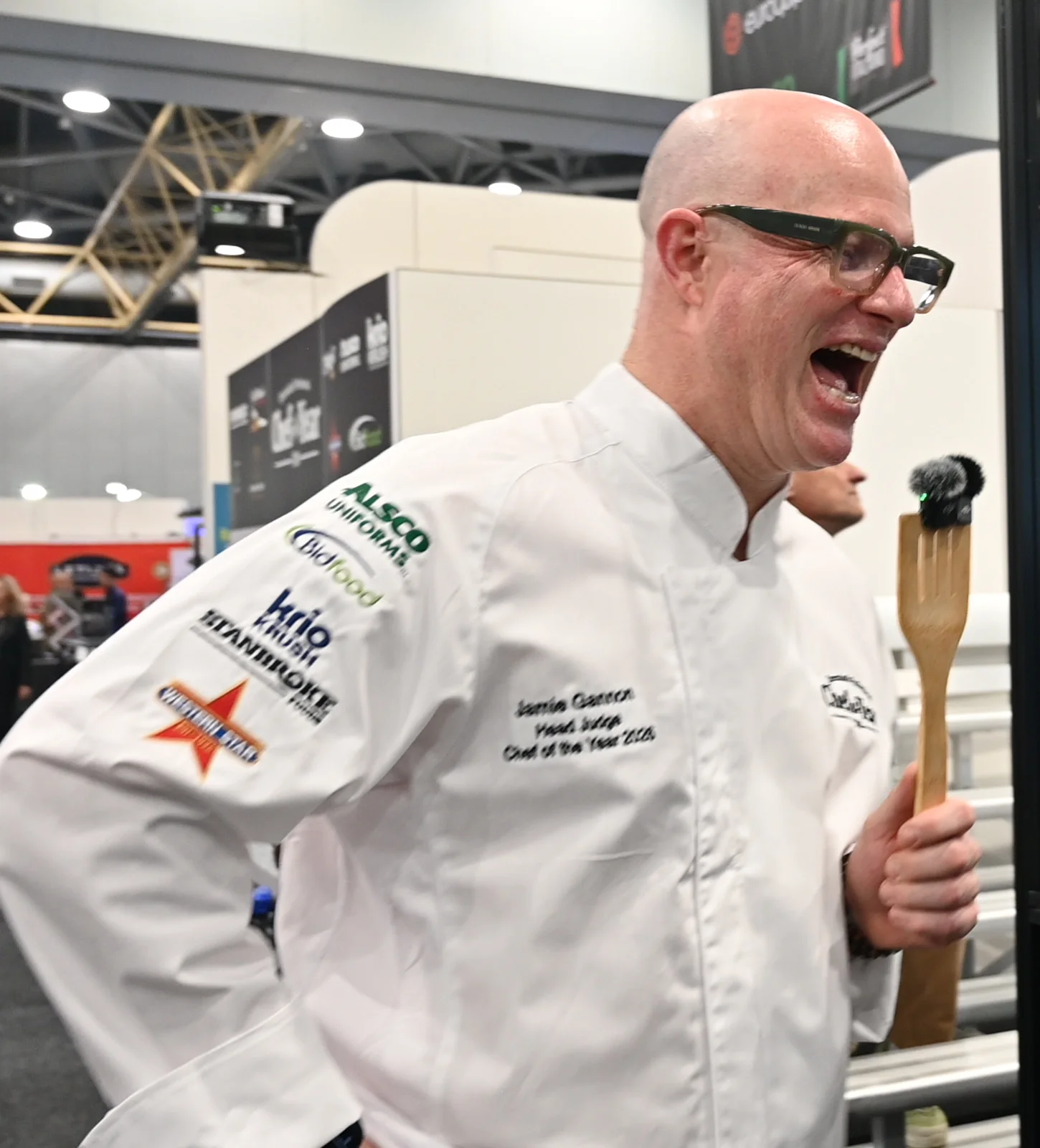
A buzz worth keeping
Gannon is enthusiastic about Brisbane, describing its food scene as flying and pointing to the energy in Fortitude Valley and the city's multicultural mix. He says he loves coming here for the buzz.
His optimism comes with a reservation: he hopes the momentum continues beyond the Olympics rather than leaving a hangover afterwards.
For a young Queensland chef wanting to lead a kitchen or open a restaurant, he leaves us with advice that needs neither a mystery box nor a spreadsheet.
“Listen, listen with your ears. You can't hear something when your lips are moving.”
Sources & editorial notes
Based on Brisbane Food Guide's recorded interview with Jamie Gannon at Food & Hospitality Queensland on 13 October 2026. Direct quotations were checked against the recording; other interview passages are attributed paraphrase. His roles and the 2025 Queensland Chef of the Year result link to the organisers' and his agency's own pages. His current company, East Coast Collective, is as he told BFG on 17 October 2026.
Brisbane Food Guide attended Food & Hospitality Queensland on a media pass. BFG recorded this interview on 13 October 2026. Photographs and interview frames are original BFG event coverage. Camera: Rythem Gupta for Brisbane Food Guide. This is an industry interview, not a restaurant review.
More from Food & Hospitality Queensland 2026
Share this story
Pass it on.
Send this interview to someone who runs a kitchen, or save the link for later.