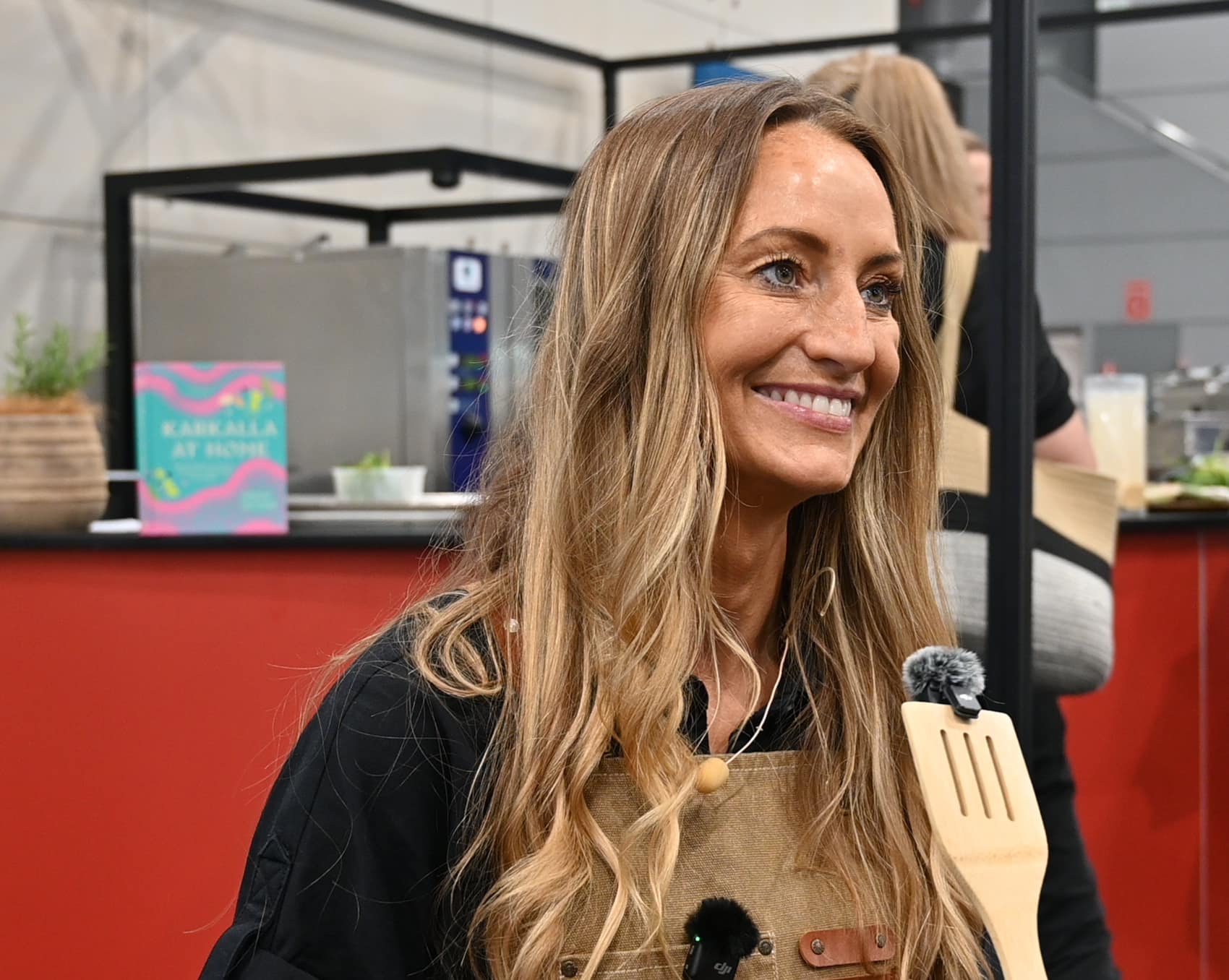
The BFG conversation
“I don't want them just to be a garnish,” Mindy Woods tells me. “I want them to be the foundation of Australian modern cuisine.”
I spoke with Woods at Food & Hospitality Queensland on 13 October, a little after her Chef's Table cooking demonstration. The Bundjalung chef from the Byron Bay area was named a Champion of Change by The World's 50 Best Restaurants in 2025. I wanted to get beyond the recognition and understand what her approach asks of the rest of us, particularly the restaurants cooking here in Brisbane.
Her answer kept coming back to the relationship between food, people and place. A native ingredient carries a history. The person using it has a responsibility to learn something about that history and the community it comes from.
That is the part of our conversation I keep coming back to. Food media spends plenty of time asking what is on a plate. Woods asks us to spend more time with the people and knowledge that put it there.
Where a Brisbane kitchen should start
I asked what an independent Brisbane restaurant should do first if it wanted to start using native ingredients. Woods' answer began with a connection to local people.
Chefs should “connect with local mob”, she says. “We've got Aboriginal people in all these big cities, in every regional place.” Learn the local food system. Find out what people enjoy eating and how they prepare it. Let those conversations shape what happens in the kitchen.
“Native food is not meant to be extractive,” she says. “It's not about taking, it's about building relationships and learning from each other.”
There is a practical difference there. A restaurant can buy an ingredient and add it to a dish very quickly. A relationship takes time, and it gives the chef someone to listen to beyond the order sheet. Her advice gives a Brisbane operator a place to begin before the menu is written.
“Native Australian ingredients aren't just a trend,” Woods says. “They are deeply seated in culture, country and community.” The foods of Bundjalung Country, she explains, differ from those around Brisbane and from those of the central desert. Each comes with its own stories and knowledge.
“Without those knowledge systems in place, they're just mere ingredients.”
Reading the seasons from what is around you
When we talked about seasonality, Woods described six seasons on Bundjalung Country. Her explanation moved through things happening in the landscape: “whether the whales are swimming south or whether they're swimming north, what birds are flying in the sky, what's flowering, what's going dormant.”
I like how specific that answer is. It asks a cook to pay attention to what is happening around them, and to learn from the people who understand those changes. A date on a calendar can tell you the month. The examples she gives tell you what to look for.
Asked what the wider industry overlooks, she returned to seasonal harvesting. “Nothing should be available 12 months of the year,” she says. When it is, she argues, “we're not getting the best out of the ingredients and we're not doing the right thing by country.”
That is her challenge to the expectation that every ingredient should always be available. A seasonal menu has to leave room for something to disappear, and for a cook to work with what is available in its place.
Taking the cooking onto Country
Woods says she closed her Byron Bay restaurant to take her cooking onto Country. The way she describes that decision brings the conversation back to experience: walking on the land, taking off shoes, cooking on fire and hearing stories from her elders.
She describes it as paying homage to her ancestors and to Country. “It is the most genuine way,” she says, “that we can experience food and country and culture together.”
The setting matters to the story she wants to tell through food. In her account, the landscape and the people sharing their knowledge are part of the experience alongside the cooking. That helps explain why her advice to another chef begins with meeting people. She is asking them to understand more of what they are working with.
What a macadamia can do
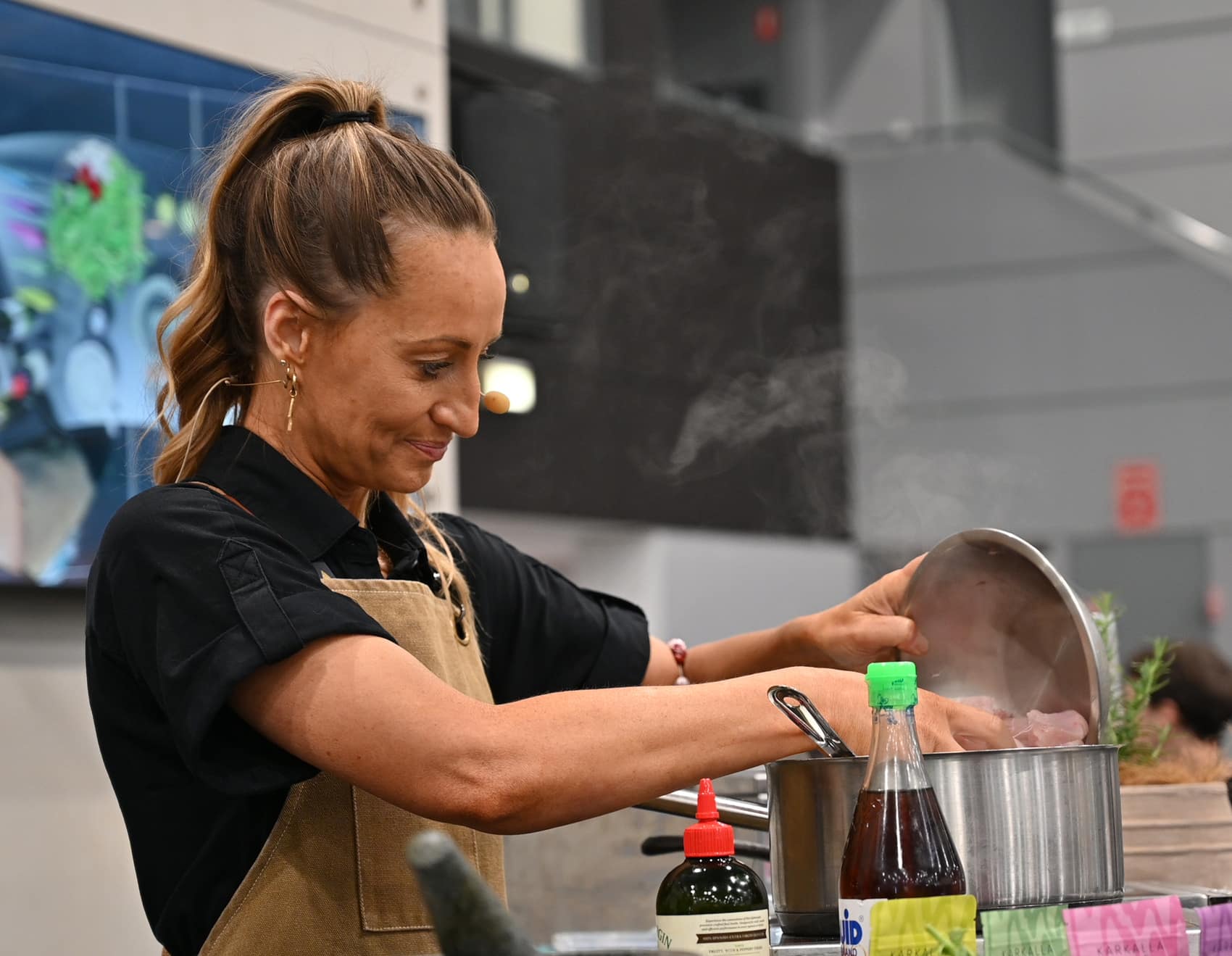
Her demonstration gave the conversation something very practical to work with: macadamias. Woods roasts them, grinds them into a butter she uses in place of tahini, then works in warm water to make a cream. On stage, that cream went into a curry, where coconut might otherwise thicken the sauce. She also uses it for ice cream and custards.
She told the audience she spent some of her childhood in Malaysia and makes her own native laksa paste. That detail brings her broader idea into focus. A dish can draw on the food someone grew up with while finding a place for ingredients grown here.
“When we take heritage and inspiration from anywhere on the planet and we layer native Australian ingredients into it,” she says, “that's truly modern Australian food.”
Woods also connected the macadamia's history to a tree near Gympie. A 2019 genetic study suggests that most Hawaiian cultivars may trace their maternal ancestry to a single wild population, possibly a single tree. For Woods, the story was a way of thinking about lineage. “Our food has ancestors too,” she told the room.
At the demonstration, she also asked the audience to “learn the history of the culture and the connection behind them”. The method and the knowledge belong in the same conversation. Knowing how to turn the nut into cream is one useful lesson; learning where it comes from gives that lesson more depth.
Sources & editorial notes
Brisbane Food Guide attended Food & Hospitality Queensland on a media pass. BFG recorded this interview and the Chef's Table demonstration on 13 October 2026. The photographs are original BFG event coverage. Woods' accounts of her work and history are attributed to her; the award and macadamia research link to their sources.
More from Food & Hospitality Queensland 2026
Share this story
Pass it on.
Share this conversation with someone who cares about Australian food.
Add Brisbane Food Guide as a preferred source on Google
More from the BFG Journal